
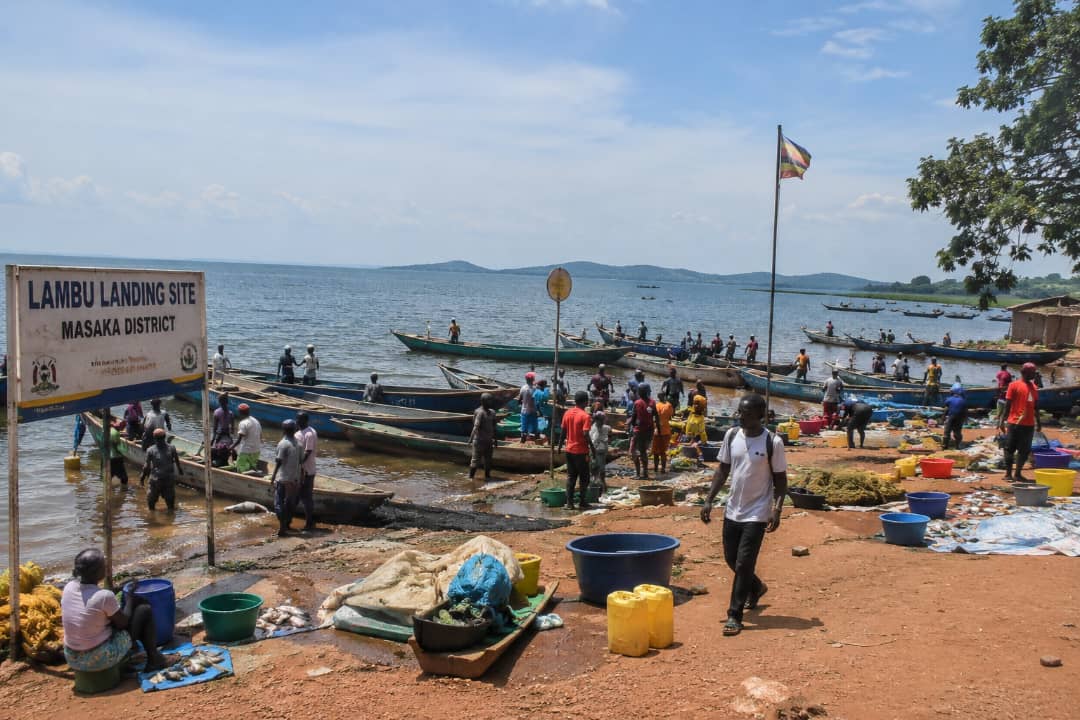
MASAKA — Residents and fishermen at Lambu Landing Site have expressed concern over persistent challenges affecting their livelihoods, saying poor access to healthcare, inadequate education services, high transport costs and the continued threat of illegal fishing are undermining development in the lakeshore community.
Located on the shores of Lake Victoria, Lambu is one of the busiest fishing centres in Masaka District. However, residents say they continue to struggle to access basic services despite contributing significantly to government revenue through the fisheries sector.
“We generate revenue for government through fishing, but when someone falls sick, accessing quality healthcare remains a challenge,” said John Ssenfuma, a fisherman at the landing site. “Many residents have to travel long distances to seek specialised treatment, which is costly and time-consuming.”
Parents in the area also raised concerns over education, saying some children drop out of school due to high costs and limited learning facilities in nearby schools.
“Many families depend entirely on fishing, and whenever catches reduce, parents find it difficult to keep children in school,” said Sarah Namatovu, a resident. “Government should invest more in education services in lakeshore communities.”
Residents further cited high transport costs as a major barrier to trade and access to essential services, noting that movement of fish and people to and from the landing site remains expensive.
“Transport costs eat into our profits. Whether you are taking fish to the market or seeking medical services, you must spend a lot of money,” another resident said.
Fishermen also raised concerns over illegal fishing, saying while enforcement operations are necessary to protect fish stocks, there is need for greater sensitisation and engagement to ensure compliance with regulations.
“We support efforts to eliminate illegal fishing because it protects the future of the industry,” said John Ssenfuums, a member of the fisheries committee. “However, there is a need for continuous sensitisation so that fishermen understand the regulations and comply willingly.”
Local leaders have called for increased government attention to lakeshore communities, arguing that fishing areas remain underserved despite their economic importance.
Mubeezi, a local leader in the district, said investment in healthcare, education and transport infrastructure is critical to improving livelihoods in fishing communities.
“The fishing sector contributes significantly to livelihoods and government revenue. There is a need for improved healthcare facilities, better schools, affordable transport and continued support for sustainable fishing practices,” he said.
Residents now hope government programmes and future budget allocations will prioritise lakeshore communities and address the structural challenges affecting livelihoods along Lake Victoria.
